Inside a Casting Foundry: The Heart of Metal Manufacturing
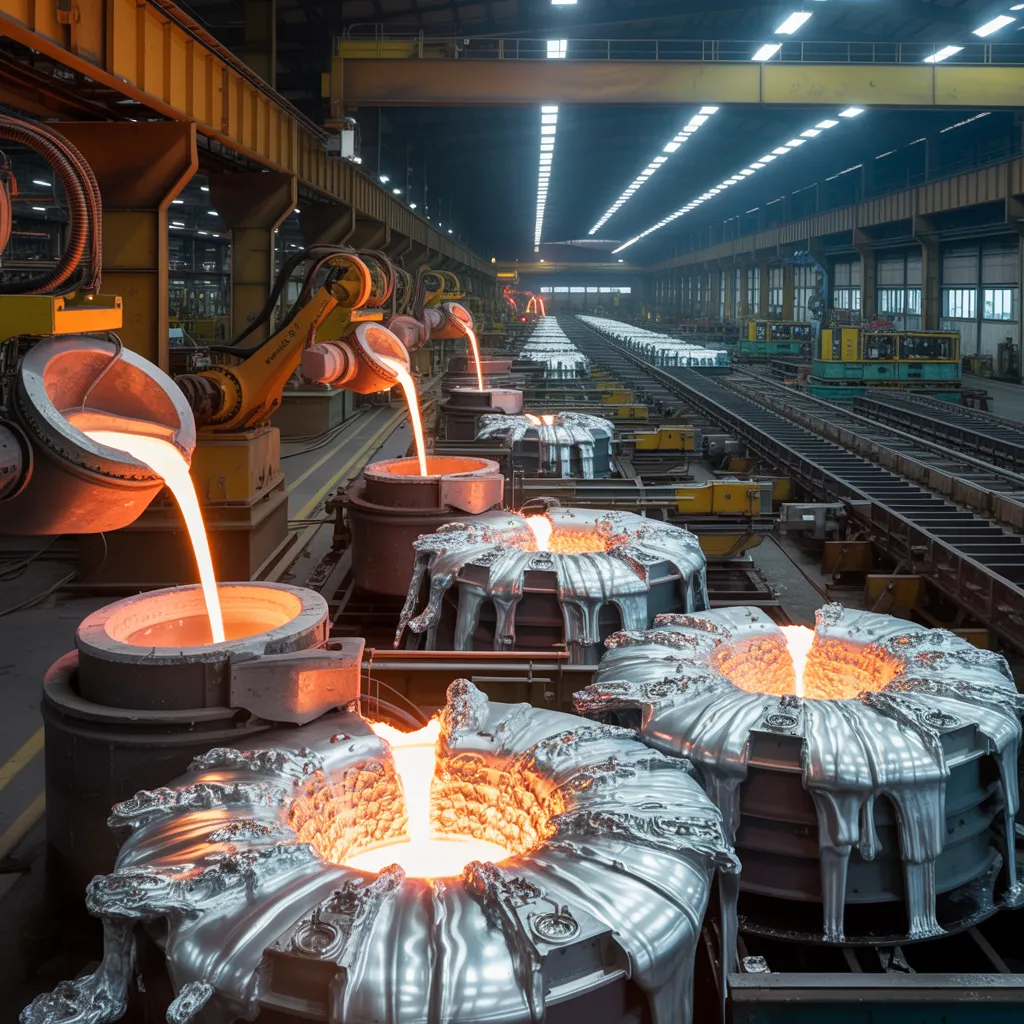
Deep inside a metal casting facility, activities occur that are vital to metal manufacturing. Smelting furnaces transform alloys into liquid forms, while trained workers oversee detailed casting molds. Automated systems serve a critical function, improving operational efficiency and environmental sustainability. However, the field faces a range of obstacles that could impact its future. Understanding these dynamics uncovers more than mere manufacturing processes; it underscores a sophisticated balance of heritage techniques and cutting-edge solutions. What the future holds for this essential field?
The Essentials of Metal Casting
Metal casting acts as a foundational process in modern manufacturing, changing molten metal into solid components. This technique has been employed for centuries, enabling artisans see the details and manufacturers to produce components with detailed shapes and exact dimensions. The technique commences with identifying suitable metal alloys, which are then melted at high temperatures.
When molten, the metal is transferred into molds designed to shape the final product. These molds can be constructed from different materials, including sand, metal, and ceramic, depending on the necessary specifications and manufacturing volume.
When the metal cools down and solidifies, the mold is removed, uncovering the cast object. This process delivers notable benefits, such as minimized material waste and the capability to create elaborate shapes that would be hard to attain through conventional manufacturing processes. Grasping these fundamentals is vital for grasping the value of metal casting in today's industry.
Core Processes in Metal Casting: Melting, Molding, and Refinement
The process of metal casting involves three critical processes: melting, molding, and refinement. Initially, metal is heated in a furnace until it reaches a molten state, enabling easier shaping and handling. This melting stage is essential, as it directly influences the quality of the end result.
Following this step, the liquid metal is poured into forming molds, which shape it into particular shapes. The type of molding material—including options such as sand, metal, or ceramic—impacts the finished casting's surface finish and geometric accuracy.
In the final stage, the refinement process includes cooling and solidifying the cast metal, with subsequent processes such as heat treatment, machining, or polishing to strengthen its mechanical qualities. This phase ensures the final product adheres to exacting quality benchmarks and detailed specifications. Every one of these steps is vital, contributing to the overall efficiency and effectiveness of metal casting, resulting in premium-grade components across multiple industries.
Breakthroughs in Today's Foundry Industry
As the foundry industry evolves, innovations are reshaping traditional practices, improving productivity and environmental responsibility. Developments in modern technology, such as 3D printing, are overhauling how molds are produced, allowing for complex designs and reduced lead times. This technique not only cuts down on waste but also promotes personalization, meeting specific client demands more effectively.
Additionally, the implementation of automation and robotics optimizes production processes, increasing productivity and reducing human error. Smart manufacturing technologies, including connected IoT sensors, deliver live data analytics, allowing detailed oversight of operations alongside predictive maintenance.
Furthermore, eco-friendly materials and techniques are growing in popularity, minimizing the impact on the environment of metal casting. The utilization of repurposed metals and low-energy smelting systems reflects a movement towards greener operations, supporting international sustainability targets. These breakthroughs collectively contribute to a stronger and more sustainable casting sector, well-positioned to meet upcoming demands while fulfilling the changing demands of the industry.
What Obstacles Do Casting Foundries Encounter?
What obstacles do casting foundries encounter in an ever-evolving industry? A major concern is the volatility of raw material prices, which can significantly strain production budgets. Additionally, environmental regulations are growing ever more demanding, forcing foundries to implement cleaner technologies to reduce emissions and waste. This transition demands significant capital investment, which can burden smaller facilities.
Moreover, overseas manufacturing competition frequently results in price pressures, creating obstacles for domestic foundries to maintain profitability. Foundries must also contend with keeping pace with quickly evolving technological innovations, such as digitalization and automated processes, which require sustained training efforts and financial investment.
Ultimately, disruptions within the supply chain, exacerbated by international developments, represent a persistent threat, impacting the prompt delivery of components and materials. Together, these obstacles demand casting foundries to be agile and innovative to thrive in a demanding market landscape.
The Significance of Skilled Labor in Casting Foundries
While automation and technology continue to reshape the production environment, skilled workers continue to serve as a foundation in foundry operations. The intricate nature of metal casting demands a level of expertise that automated systems cannot fully achieve. Experienced professionals have the capability to interpret complex designs, choose suitable alloys and compounds, and resolve challenges that emerge during the production cycle. Their practical expertise is vital for ensuring quality control and precision, particularly in high-stakes projects that require precise measurements.
Additionally, skilled labor plays a significant role in managing and enhancing machinery, making certain that production flows smoothly and productively. As casting processes evolve, these employees are also charged with modifying and perfecting approaches, merging cutting-edge technologies while upholding established craftsmanship. Across this progressive field, the partnership between qualified labor and technological innovation is fundamental for preserving the excellence and consistency that distinguish reputable casting foundries.
Emerging Trends in Casting: What Does the Future Hold for the Industry?
Emerging trends in the casting industry are poised to reshape its direction, driven by innovations in technology and changing industry needs. Automation and artificial intelligence are continuously improving manufacturing workflows, enhancing precision and reducing labor costs. Furthermore, the integration of 3D printing is reshaping mold production, facilitating advanced design possibilities and shorter production timelines.
Sustainability is becoming a focal point as companies aim to minimize their environmental footprint. This includes using recycled materials and developing energy-efficient practices within foundries. Moreover, the demand for lightweight materials, particularly in the automotive and aerospace sectors, is pushing innovations in alloy development.
The industry is also witnessing a shift towards digital transformation, as IoT technologies facilitate real-time monitoring and predictive maintenance. As these developments align, the casting sector is expected to undergo substantial changes, equipping itself to address the demands of an evolving worldwide environment.
Commonly Asked Questions
What Types of Metals Are Commonly Cast in Foundries?
Commonly cast metals in foundries include aluminum, iron, steel, bronze, and brass. Each metal possesses unique properties, making them suitable for various applications, from automotive components to decorative items, demonstrating the adaptability of casting processes.
How Does Metal Casting Affect the Environment?
Metal casting operations impacts the environment through emissions, energy consumption, and waste generation. It can contribute to air and water pollution, while also consuming considerable resources, driving the need for eco-friendly practices and technologies in the field.
What Safety Precautions Are Implemented for Foundry Workers?
Foundries utilize various safety measures, including protective gear, ventilation systems, regular training sessions, and strict adherence to safety guidelines. These practices aim to minimize hazards and ensure a protected workplace setting for all staff members.
How Are Casting Defects Identified and Corrected?
Casting defects are identified through visual examinations, dimensional assessments, and non-destructive evaluation techniques. Corrections involve modifying procedures, fixing flaws, or repeating the casting process as needed to maintain quality standards and conformance to requirements.
What Is the Standard Production Timeline for a Casting?
A standard production timeline for a casting involves a number of stages: pattern creation, pouring, mold making, finishing, and cooling. This process generally spans from several days to a few weeks, based on complexity and production volume.