Reasons to Select an Aluminum Foundry? Key Reasons for Your Next Project
Choosing an aluminum foundry for any project provides many advantages. The light nature of aluminum improves efficiency and lowers costs. Its exceptional strength-to-weight ratio allows for precise casting, making it well-suited for complex designs. Additionally, aluminum's built-in corrosion resistance contributes to reduced maintenance requirements. These qualities highlight its rising prominence in various industries. Yet, the merits go beyond these qualities alone, encouraging a deeper look of what aluminum foundries have to offer.
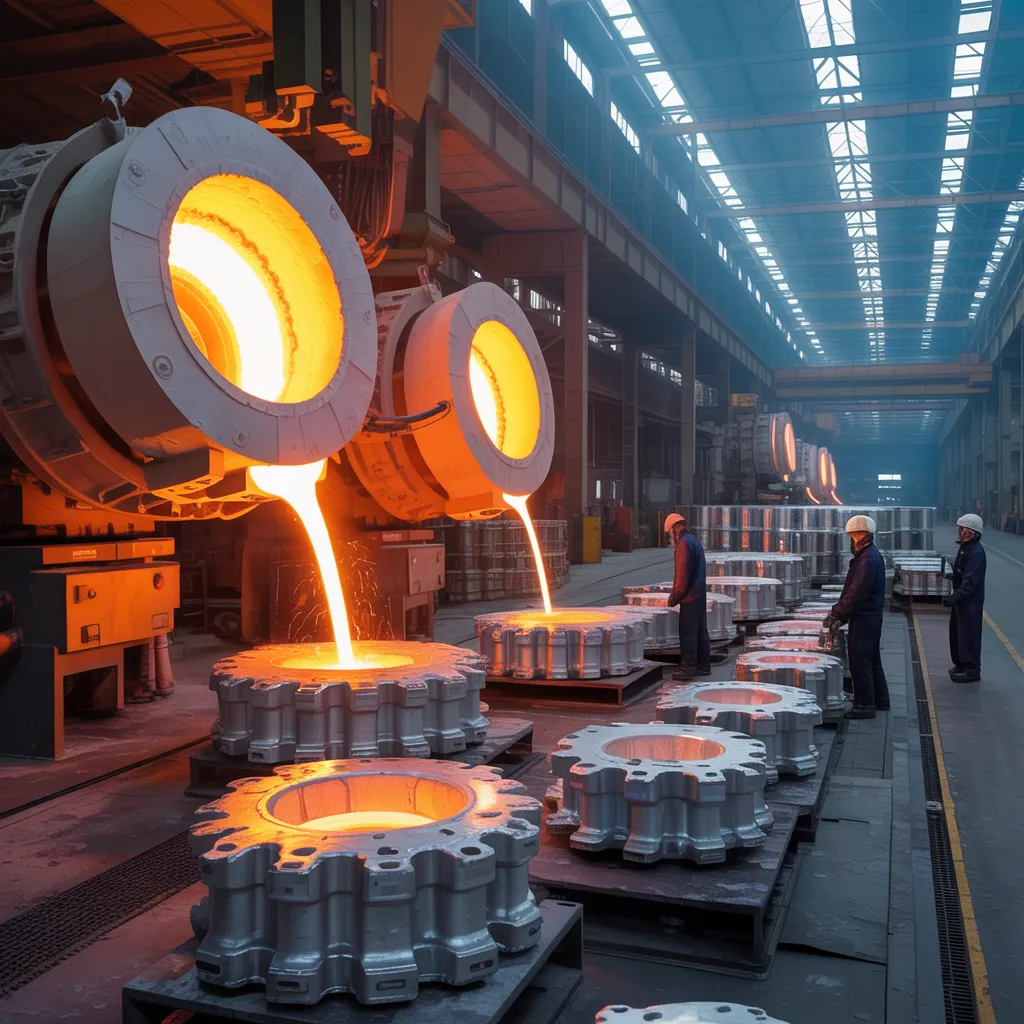
The Weight-Saving Benefits of Aluminum Foundries
This versatile metal, recognized for its exceptional lightweight characteristics, serves a critical role in numerous industries, making aluminum foundries an essential choice for producers. The inherent lightness of aluminum allows for considerable decreases in total product weight, which helps enhance productivity and performance in numerous applications. This is particularly advantageous in sectors such as aerospace, automotive, and construction sectors, where weight considerations are critical.
Furthermore, the simplicity of manufacturing associated with aluminum allows foundries can manufacture intricate shapes and designs without compromising structural integrity. This flexibility allows manufacturers to develop and produce parts that meet specific performance criteria while limiting material usage.
Furthermore, lighter components lead to decreased fuel consumption and lower emissions in transportation applications, contributing to sustainability efforts. The lightweight advantage of aluminum foundries not only reinforces current industrial needs but also aligns with the expanding commitment to green manufacturing standards within diverse fields.
What Gives Aluminum Components Their Strength and Reliability?
Aluminum parts are recognized for their remarkable strength and dependability, combining lightweight properties with remarkable durability. Their inherent corrosion resistance further enhances their longevity, making them appropriate for numerous industrial applications. Advanced casting methods enable the production of complex designs while preserving structural integrity.
Lightweight Yet Durable
Lightweight materials frequently pose a contradiction in terms of strength and durability. Aluminum, given its low density, emerges as an outstanding option for numerous applications. Its strength-to-weight ratio is one of the highest among all metals, permitting durable components without the added burden of weight. This characteristic is particularly beneficial in industries such as aerospace and automotive, where performance and efficiency are paramount. Moreover, aluminum's capability to resist substantial stress without deforming strengthens its reliability in rigorous environments. The metal's unique properties enable the creation of complex, intricate shapes, further expanding its utility in engineering. In summary, aluminum components offer a blend of lightweight design and reliable strength, establishing them as a favored choice for varied projects.
Benefits of Corrosion Resistance
Corrosion resistance is a fundamental characteristic that improves the durability and dependability of aluminum components. In contrast to many other metals, aluminum instinctively develops a protective oxide layer upon air exposure, halting additional oxidation. This characteristic allows aluminum to withstand various environmental conditions, including moisture and salt, making it ideal for applications in marine and industrial settings. The lasting nature of aluminum components minimizes maintenance requirements and strengthens the overall resilience of any project. Additionally, the ability to resist corrosion without the need for protective coatings simplifies manufacturing processes. Consequently, sectors spanning from automotive to aerospace are increasingly turning to aluminum for its strength, lightweight nature, and outstanding corrosion resistance, guaranteeing that components preserve their integrity throughout their lifespan.
Advanced Casting Strategies
The strength and reliability of aluminum components can be considerably attributed to high-level precision casting processes. These techniques, such as die casting, sand casting, and investment casting, confirm that end products satisfy rigorous standards. By leveraging CAD and CNC machines, fabricators can accomplish detailed forms and exacting tolerances, thereby improving structural integrity. Furthermore, precision casting reduces material waste and maximizes aluminum utilization, supporting greater cost efficiency. The regulated cooling procedures inherent in these methods also minimize the occurrence of flaws, guaranteeing uniform strength distribution among components. Therefore, the application of precision casting techniques positions aluminum components as dependable choices for various industries, including automotive, aerospace, and construction.
In What Ways Does Corrosion Resistance Improve Durability?
While many materials succumb to environmental factors over time, aluminum stands out due to its outstanding resistance to corrosion. This characteristic considerably extends the longevity of aluminum elements, making them well-suited for a wide range of applications, including aerospace, marine, and automotive industries. Aluminum's natural oxide layer establishes a safeguarding layer that stops additional oxidation from occurring, making certain that even in demanding environments, the metal preserves its structural strength.
The Sustainable Practices of Aluminum Foundries
Aluminum foundries play an essential role in promoting sustainability through the recyclability of aluminum, which can be reused indefinitely without loss of quality. Their energy-saving production techniques considerably decrease energy consumption compared to competing materials, contributing to a reduced carbon footprint. This set of approaches identifies aluminum foundries as environmentally sound selections in contemporary manufacturing.
The Recyclability of Aluminum
The recycling of aluminum represents a pillar of environmental responsibility in today's manufacturing landscape. The metal boasts a remarkable ability to be recycled repeatedly without degradation of quality, positioning it as a premier choice for eco-friendly applications. Aluminum foundries play an essential role in this process, gathering aluminum scrap and repurposing it into new goods. This practice both safeguards natural resources and substantially decreases energy demands in comparison to virgin aluminum production. Moreover, recycling aluminum results in lower emissions, contributing to international environmental targets. As more industries embrace green practices, the recyclable nature of aluminum amplifies its attractiveness, confirming that working with aluminum foundries supports and advances a circular economy model. This commitment to recycling underscores the importance of aluminum in sustainable manufacturing solutions.
Sustainable Energy Production Strategies
The eco-friendliness of aluminum foundries extends beyond recyclability, including energy-saving manufacturing techniques that notably lower environmental consequences. These manufacturing plants employ innovative technologies such as low-energy melting and casting techniques, which greatly reduce electricity consumption. Moreover, numerous plants incorporate sustainable power solutions, while bolstering their dedication to eco-friendly practices. Advanced furnace designs maximize thermal efficiency and reduce material loss, contributing to decreased production costs and lower power demands. Moreover, manufacturing enhancements, such as rapid prototyping and efficient material handling, simplify manufacturing while saving energy and materials. By integrating these eco-conscious techniques, aluminum foundries not only fulfill manufacturing guidelines but also promote environmental stewardship, making them a responsible choice for companies dedicated to responsible output. These approaches ensure that aluminum remains a viable option for future projects.
Reduced Carbon Footprint
Although numerous industries contend with their environmental impact, aluminum check this foundries are notable for considerably decreasing their carbon footprint. The production of aluminum, particularly when utilizing recycled materials, is significantly less demanding in terms of energy than that of other metals. This process not only reduces harmful emissions but also conserves natural resources. Additionally, progress in technology empowers foundries to adopt more sustainable manufacturing processes, further decreasing their environmental impact. By emphasizing green manufacturing approaches, aluminum foundries contribute to a circular economy, where materials are recycled and reimagined, thereby cutting down on unnecessary waste. This dedication to environmental responsibility resonates with environmentally conscious consumers and businesses alike, making aluminum foundries a preferred selection for projects focused on reducing environmental impact and championing conscientious industrial practices.
Accurate Casting: Achieving Detailed Designs
Investment casting emerges as a critical method in the aluminum manufacturing industry, allowing for the development of detailed parts with exceptional accuracy. This approach allows manufacturers to manufacture complex geometries that traditional casting techniques find difficult to replicate. Through the use of advanced molding technologies, precision casting guarantees that all specifications are precisely maintained, fulfilling rigorous engineering requirements.
The benefits of investment casting are notably useful in industries that demand high-quality components, such as the aerospace and automotive sectors. The smooth surface finish and tight tolerances accomplished through this technique decrease the necessity of extensive post-processing, optimizing the overall manufacturing process.
Moreover, the precision casting process minimizes wasted material, as it facilitates the most efficient use of aluminum. This not only contributes to sustainability goals but also produces a more optimized production process. In essence, precision casting in aluminum foundries acts as an indispensable resource for engineers and designers striving for innovative and high-performance applications.
Cost-Effective Solutions With Aluminum
Discovering economical solutions with aluminum highlights its outstanding adaptability and affordability. This lightweight metal allows for reduced manufacturing costs, making it an attractive option for various applications. The effectiveness of aluminum casting techniques reduces material waste, which has a direct positive effect on overall profitability. Moreover, aluminum's corrosion resistance and durability lead to lower maintenance expenses over the product's lifespan.
Furthermore, aluminum's outstanding electrical and thermal conductivity can lower energy costs in uses such as heat exchangers and electrical components. Its recyclability also supports cost-effectiveness; reclaimed aluminum demands only a minimal amount of the energy required for primary production, thereby decreasing overall project costs.
Selecting aluminum strengthens both the economic and environmental aspects of a project, offering a responsible solution without sacrificing quality. Overall, the economic advantages, combined with aluminum's remarkable properties, make it a favored choice for innovative and cost-efficient manufacturing solutions.
Popular Questions We Receive
Which Industries Frequently Utilize Aluminum Castings?
Aluminum castings are commonly utilized in a wide range of industries, including automotive, aerospace, construction, and consumer goods. These sectors benefit from aluminum's durability, lightweight properties, and corrosion resistance, making it a superior choice for countless applications.
How Do Aluminum Foundries Ensure Quality Control?
Aluminum manufacturing foundries maintain quality control through comprehensive testing procedures, encompassing material analysis, dimensional verification, and live monitoring during production. These facilities implement standardized processes and periodic audits to copyright high standards and minimize defects in finished cast products.
What Are the Most Frequent Applications of Aluminum Parts?
Common applications for aluminium components include vehicle parts, aerospace structures, consumer electronic products, construction materials, and packaging solutions. These lightweight and corrosion-resistant qualities make them well-suited for boosting performance and durability across a wide range of industries.
Can Aluminum Be Recycled, and How?
This versatile metal is infinitely recyclable without losing quality. The aluminum recycling process involves melting scrap aluminum, removing impurities, and reforming it into new products, significantly reducing energy consumption relative to virgin aluminum production.
How Long Is the Typical Lead Time for Aluminum Castings?
The standard lead time for aluminum cast parts typically runs two to six weeks, influenced by factors such as order volume, complexity, and current foundry capacity, influencing overall production schedules and delivery timelines.